Category C — Nutrition and Meal Support for Everyday Living


Mealtimes can become stressful when planning, shopping, preparation, appetite, routine or dietary needs are hard to manage. A simple lunch can start to feel like a long list of decisions. What is available in the kitchen? What is safe to eat? What fits the agreed guidance? Who will prepare it? Has there been enough to drink today?
CareHopes offers practical, non-clinical support with everyday food and drink. The aim is to make eating and drinking feel more organised, more comfortable and easier to fit into daily life. Support is shaped around personal preferences, culture, usual routines and any dietary information supplied by the service receiver, family, representative or an appropriate professional.
This is everyday meal support, not medical nutrition care. A companion can help with planning, light preparation and friendly prompts, but they do not diagnose, treat, prescribe diets or replace advice from a GP, dietitian, speech and language therapist or other healthcare professional.

Support built around familiar food and personal routines
Food is personal. It can connect with culture, memory, comfort, faith, health needs and independence. That is why support begins with understanding what someone already likes, avoids and expects from their daily routine.
A companion may confirm details such as:
Preferred foods and drinks
Usual mealtimes and snack times
Cultural or religious food preferences
Allergies or intolerances
Foods that are disliked or difficult to manage
Dietary instructions shared by the client or an appropriate professional
Any known swallowing, choking or texture-related guidance
This information matters before any food is prepared. If a person has a known allergy, intolerance, swallowing risk or special diet, the companion must have clear written or verbal guidance from the right source before offering support.
For example, one person may enjoy a light breakfast, a hot lunch and a small evening snack. Another may prefer several smaller meals through the day. Someone else may have cultural food preferences that shape how food is selected, cooked or served. Good support respects these details rather than treating mealtimes as a fixed routine for everyone.
A helpful plan might include:
A short list of reliable meal ideas
Notes on favourite drinks
A reminder of foods to avoid
Clear guidance on portion preferences
Agreed times for meals, snacks and drinks
Instructions on who to contact if concerns arise
The goal is not to control what someone eats. The goal is to support a routine that feels safe, respectful and manageable.
Meal ideas that make planning easier
Planning food can be tiring, especially when energy, mobility or confidence is limited. CareHopes can support with simple meal ideas that fit the agreed plan and the person’s usual preferences.
This may include talking through what sounds appealing, checking what is already in the cupboard or fridge, and making a short list of meals for the next few days. The focus stays practical. Meals do not need to be complicated to be enjoyable.
Everyday meal ideas might include:
Soup with bread or toast
Scrambled egg on toast
Jacket potato with a suitable topping
Porridge with fruit
Sandwiches, wraps or salad plates
Yoghurt with fruit
Cheese and crackers, where appropriate
A simple pasta dish
A ready meal prepared according to instructions
A familiar cultural or family meal, where it is safe and agreed
The best ideas are often the ones that reduce stress. If someone enjoys the same breakfast most mornings, that can be part of the plan. If a person likes choosing lunch on the day, the shopping list can include a few flexible options.
Meal planning may also help avoid waste. Checking available ingredients before shopping can prevent buying items that are already at home or unlikely to be used. It can also make it easier to keep useful basics available, such as bread, milk, fruit, soup, eggs or other agreed staples.

Shopping support with clear agreements
Shopping can be one of the biggest barriers to regular meals. It involves planning, travel, carrying bags, reading labels, managing money and remembering what is needed. Support can make this process less demanding.
CareHopes may help by:
Discussing meal ideas before shopping
Preparing a shopping list
Checking what food is already available
Helping organise a shopping trip
Supporting an online grocery order
Helping put shopping away, where agreed
Before any purchase is made, budgets and payment arrangements must be agreed. This protects everyone involved and keeps the support clear. It should be known in advance how much can be spent, what payment method will be used, and whether there are any preferred shops, brands or substitutions.
Shopping support should also take dietary information seriously. If a person needs to avoid certain ingredients, labels may need checking. If a professional has advised a particular texture or food type, that guidance should be followed exactly. When information is unclear, the safe step is to pause and seek clarification rather than guess.
A companion can help organise the practical side, but they should not make clinical decisions. If there is concern about weight loss, poor appetite, dehydration, choking, coughing when eating, or repeated difficulty managing meals, this should be reported to the agreed contact. It should not be diagnosed or treated by the companion.
Light meal and snack preparation
Some people want company while they prepare food. Others may prefer a companion to do light preparation for them. The right approach depends on ability, preference, risk and the agreed support plan.
Where agreed and safe, a companion may help with tasks such as:
Setting out ingredients
Preparing a simple snack
Making a sandwich
Heating soup or a ready meal according to instructions
Washing fruit and vegetables
Pouring cereal or preparing toast
Making tea, coffee or another suitable drink
Tidying the immediate preparation area after use
The word light matters. This service is designed for practical everyday support, not complex cooking, clinical diet management or high-risk food preparation. If a task is unsafe, unclear or outside the agreed plan, it should not go ahead until guidance is confirmed.
Participation is also important. Some people enjoy being involved, even if they only choose the plate, stir a mixture or decide between two options. Others may prefer to sit nearby and chat while the food is prepared. Support should preserve independence wherever possible.
A good companion does not rush the moment. They check preferences, work safely, keep the area tidy and offer calm encouragement. Small details can make the meal feel more pleasant, such as warming a bowl of soup, cutting fruit into manageable pieces where suitable, setting out a favourite mug or making sure the person is seated comfortably before food is served.
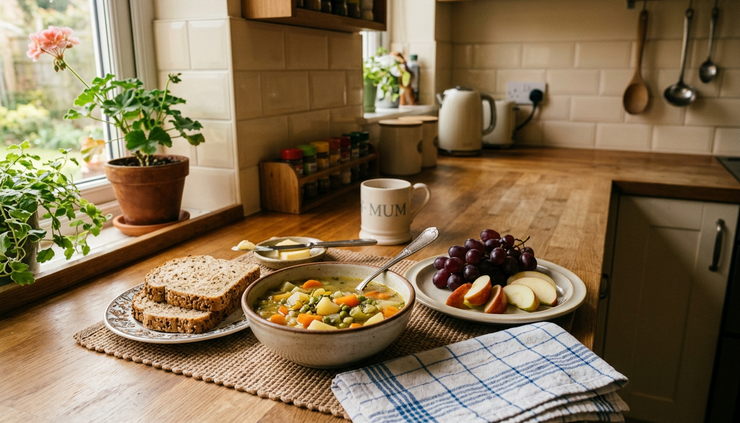
Friendly prompts for drinks and hydration
Drinking enough can be easy to forget, especially when routines change or someone does not often feel thirsty. A companion may offer or prepare suitable drinks and provide friendly reminders in line with the person’s normal routine and any guidance supplied.
This might include offering:
A cup of tea or coffee
Water
Squash or juice, if suitable
Milk or a milk-based drink, if suitable
A drink with a snack
A preferred warm drink at a familiar time of day
Prompts should feel respectful, not pressuring. A simple question such as “Would you like your usual cup of tea?” can feel more natural than repeated reminders. Some people respond well to drinks being placed within reach. Others prefer a routine, such as a drink after breakfast, with medication if appropriate and agreed, mid-afternoon, and with an evening snack.
Any special instructions must be followed. Some people may have restrictions on fluid intake. Others may need drinks prepared in a particular way because of swallowing guidance. If there are concerns about poor intake, coughing when drinking, confusion, dizziness or signs that someone is not drinking as usual, the companion should report this through the agreed route.
Support with drinks is not about monitoring like a clinician. It is about gentle, practical help that keeps ordinary routines going and flags concerns when something does not seem right.
Clear boundaries keep support safe
Food and drink support works best when everyone understands what is included and what is not. CareHopes supports the practical, non-clinical aspects of mealtimes. That means companions can help with everyday organisation and simple preparation, but clinical decisions stay with qualified professionals.
A companion cannot:
Diagnose poor nutrition or dehydration
Prescribe a diet
Decide whether swallowing difficulties are present
Change professional dietary guidance
Treat eating or drinking problems
Decide whether a food is safe when risk information is unclear
Manage complex medical nutrition needs without clear guidance
A companion can:
Follow agreed instructions
Prepare simple meals and snacks where safe
Offer suitable drinks
Help with shopping lists
Prompt regular meals and drinks
Report concerns to the agreed person
Respect preferences, culture and routine
This boundary protects the service receiver, the family and the companion. It also helps ensure that concerns reach the right professional when further advice is needed.
If there is any uncertainty about allergies, intolerances, special diets or swallowing risk, food preparation should wait until the information is clear.
This content is for general information only. It does not replace medical, nutritional or swallowing advice from a qualified professional.
What CareHopes asks before support begins
The most helpful meal support starts with clear information. Before service begins, the service receiver, client, family member or representative should share all relevant details and agree the practical arrangements.
CareHopes asks for:
Allergies, intolerances and foods that must be avoided
Dietary restrictions, including cultural, religious or personal requirements
Any known swallowing or choking risks
Professional guidance on food texture or drink consistency, where relevant
Usual meal and drink routines
Favourite foods and drinks
Foods the person strongly dislikes
Shopping budget and payment arrangements
Preferred shops or online ordering arrangements
Emergency or reporting contacts if concerns arise
It is also helpful to explain how much support the person wants. Some people want hands-on help with every step. Others only want company, prompts or help with putting food within reach. Support should be agreed in a way that feels dignified and practical.

A simple way to make mealtimes more manageable
Nutrition and Meal Support for Everyday Living is about ordinary help that can make a real difference to the flow of the day. A planned shopping list, a familiar snack, a prepared drink or a calm reminder can reduce stress and help mealtimes feel more achievable.
The best support is personal, safe and clear. It respects favourite foods, cultural needs, routines and professional guidance. It also recognises limits. When concerns arise, they should be reported to the right person rather than handled as medical issues by a companion.
With the right information in place, CareHopes can help make everyday food and drink simpler to plan, easier to prepare and more enjoyable to share.


Comments